
Terminology
as used on this site
The terminology of the storytelling boom is interdisciplinary.
The storytelling boom is firmly located within communications practice — but the study of stories is firmly located within literature studies: those who produce stories typically use language from Journalism, Media & Communications studies, and those who study stories typically use language from Literature & Narrative studies.
However — some words are shared across both disciplines, but are used differently. As a rule of thumb:
People who study stories are most interested in the text itself.
People who produce stories are most interested in the opinions expressed in the texts.
This list is intended to support communication between those who study and those who produce stories by providing simplified explanations of terms — related to ethical storytelling in the storytelling boom — introduced by one discipline, or terms that are used differently by each discipline (indicated with *).
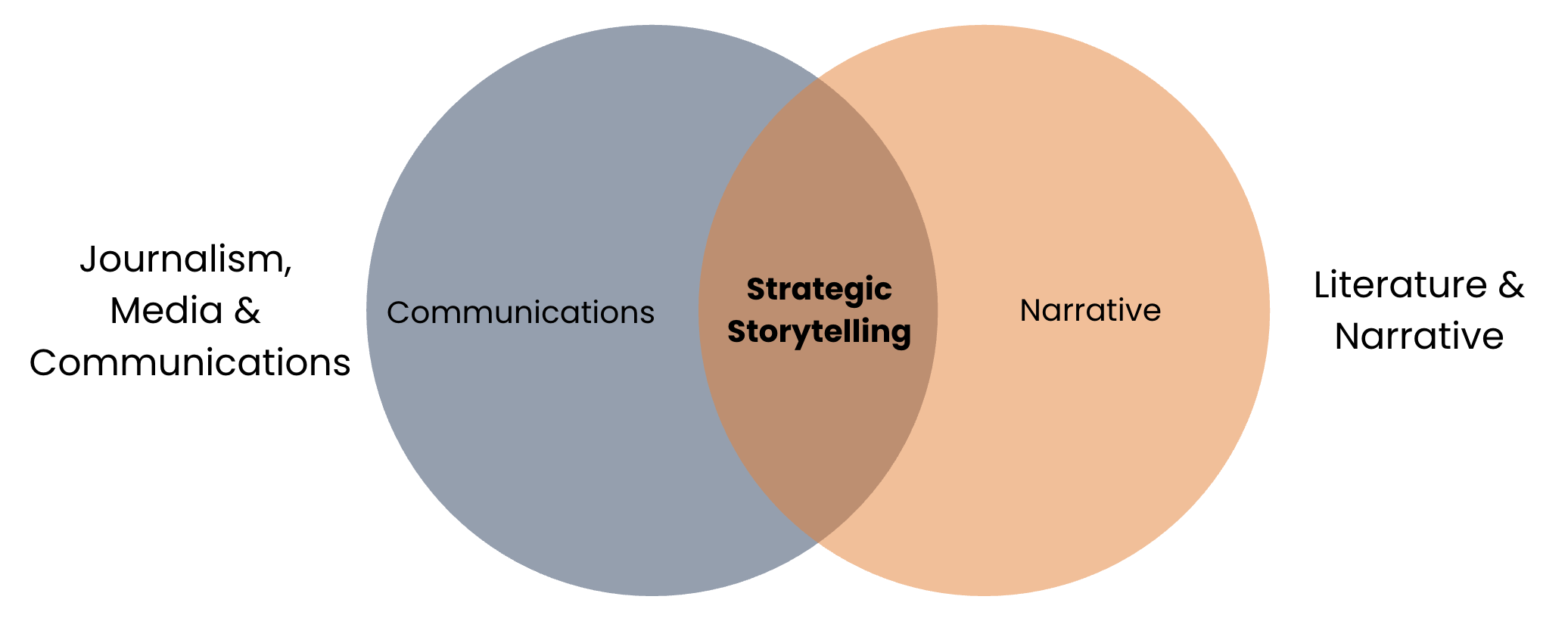
For more shared language of the narrative ecosystem of the storytelling boom, see The Narrative Home. For more specific definitions, consider: The Living Handbook of Narratology, The Living Glossary of Digital Narrative, The Encyclopedia of Ludic Terms and The Narrative Directory.
Ethical Storytelling Terminology
Ethical storytelling
Impact storytelling
Narrative change
Strategic storytelling
The practice of impact storytelling — by a nonprofit, NGO or social change organization — without causing harm. Usually, this topic refers either to harm caused by perpetuating stereotypes within the text of the story, or harm caused by the story production or telling process.
Stories told by a nonprofit, NGO or social change organization to describe the human impact of that organization’s work.
The work of persuading public opinion on a social issue.
Organizational storytelling
Stories narrated by an organization.