
The Ethical Storytelling Ecosystem
People + organizations involved in the study, production and use of ethical strategic storytelling prcatices for the production of narrative texts in the storytelling boom.
Studying Narrative Texts
Narrative Theorists
Narratologists
Researching Storytelling Practices
Development organizations
Nonprofit funders
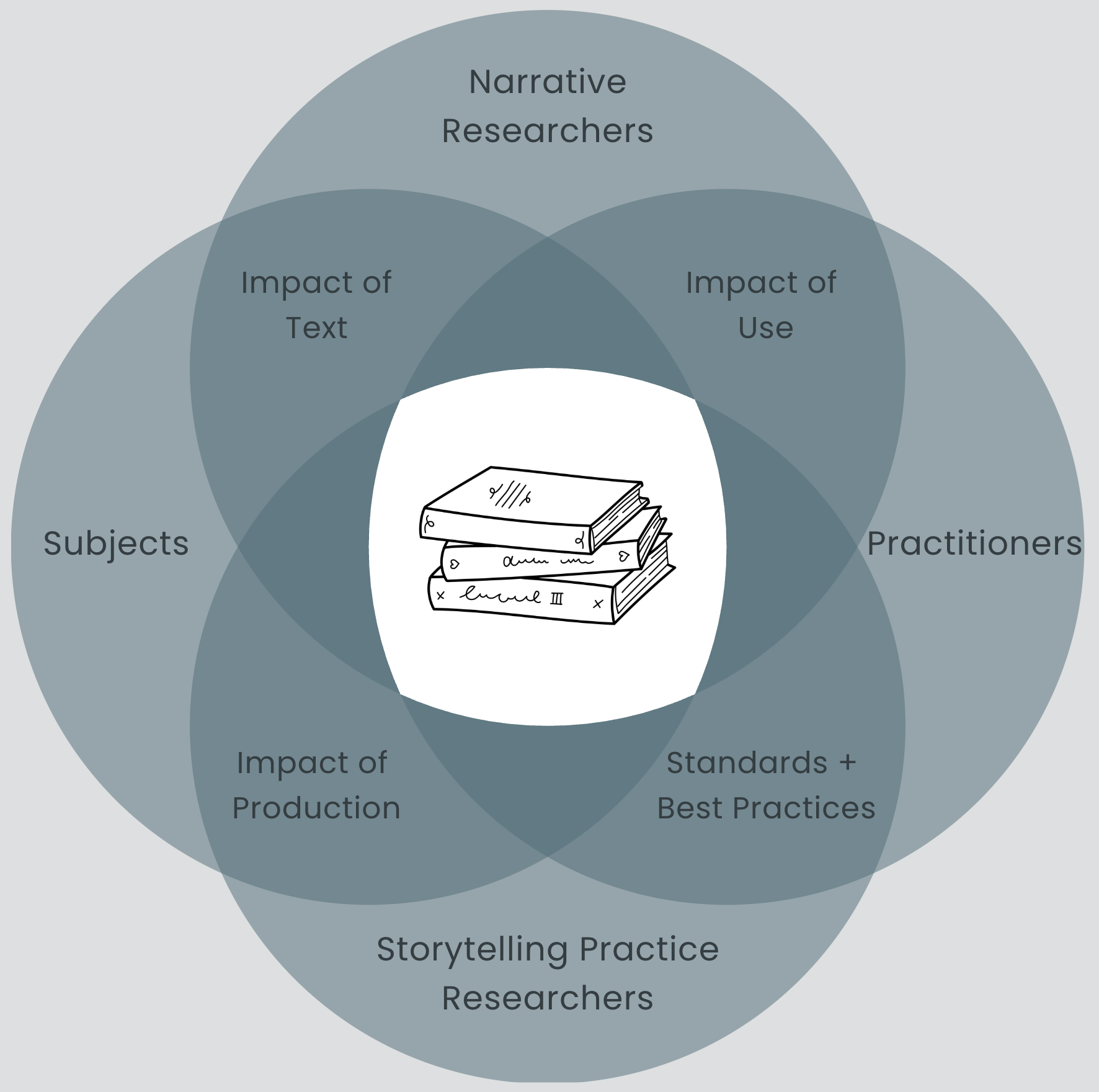
Producing Narrative Texts
Communications professionals
Storytelling consultants
Audiences
Nonprofit funders (organizations)
Donors (individuals)
Media (News media + documentary filmmakers)
People
Academics
Practitioners
Participants (or beneficiaries)
Narrative scholar: someone who studies narrative texts.
Narratologist: someone who studies narrative texts and their use.
Nonprofit, NGO or social change organization communications staff, tasked with producing assets for internal teams (fundraising, marketing, PR) or executing a strategic storytelling communications strategy such as a narrative change strategy.
People who have been impacted by the work of a nonprofit organization and agree to participate in storytelling about their life. Also referred to as “beneficiaries” (beneficiaries of the organization’s work).
There is always a power disparity between the participant — as beneficiary of the organization’s work — and the narrator.
Institutions
Nonprofit funders
Development organizations
Nonprofits, NGOs + social change organizations
Social impact media companies (filmmakers)
Organizations that produce — and narrate — stories that describe the human impact of their work (impact storytelling).
Organizations that a nonprofit or NGO would request funding (donations) from.
Fundraising norms include providing a funder with impact stories to make the nonprofit more attractive to the funder; funders may or may not explicit request impact stories during the fundraising process or for their own promotional purposes.
Organizations concerned with impact storytelling as an issue — either in the ethics of its use, or in increasing its use.
These organizations fund research into storytelling practices to promote awareness and adoption of ethical practices, fund the production of impact stories, or fund the production of educational materials for practitioners to encourage them to make greater use of impact storytelling.
Media producers who specialize in impact storytelling for social impact.
These companies are hired by nonprofits, NGOs + social change organizations to produce impact stories, or sometimes receive funding to produce a documentary film about a social issue.
Narrative Texts
Impact stories
Social impact film
Stories about real people — narrated by an organization — that describe the human impact of the organization’s work.
Impact stories are used for fundraising, promotional or press purposes — and therefore only describe a positive impact created by the organization’s work.
Long-form media — narrated by a film director — about a social issue. These films include the stories of real people to describe the human impact of a social issue.