
Storytelling in the storytelling boom.
Impact Stories | Founder + CEO Stories | Startup Stories | Member Stories | Movement Stories | Brand Story
Telling stories is the new norm in communications.
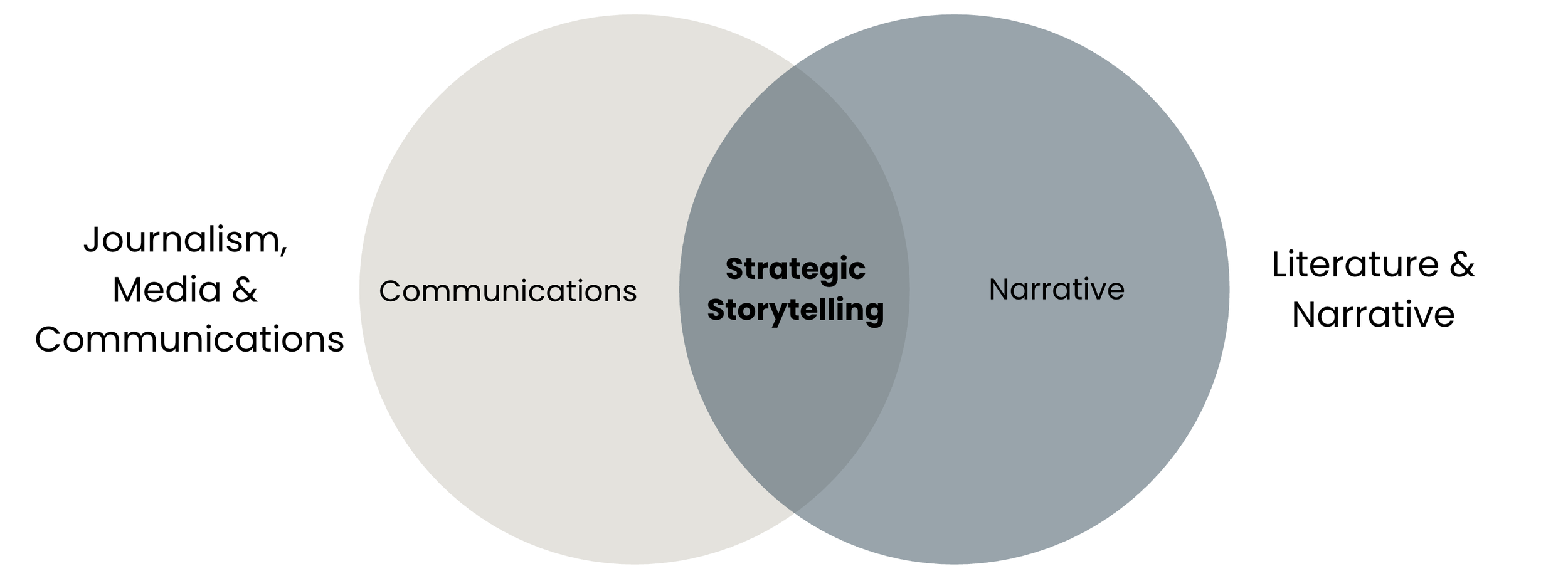
Organizational storytelling sits at the intersection of communications + narrative
The Storytelling Boom
The Storytelling Boom began when Web 2.0 — website, video-sharing and social media platforms — made it easy to tell and publish stories online. As the sheer volume of content online made it difficult to reach audiences, marketers and advertisers tried to manufacture stories to “go viral” — and the push to “say it with a story” began.
Organizational Storytelling
Before the storytelling boom, stories were mostly told by an organization’s advertising or marketing departments, but the Storytelling Boom pushed them into communications teams as well. Communications staff were already adapting to rapid changes in the media — now they had to adjust to new forms: the post, the tweet, the short, the story.
Storytelling as communication presents opportunities and challenges. Some information is difficult to communicate effectively without a story — such as describing change or a vision for the future — but stories are less efficient and require more interpretation. Organizational storytelling sits at the intersection of communications and narrative — strategic storytelling — and storytelling consultants have stepped into the resulting area of work.
Impact Storytelling
— also had to keep up with the forms of communication. donors, funders and supporters also wanted to see personal storytelling to describe the work they were supporting.
Organizational storytelling has become the solution to information that is difficult to communicate. The impact of an organization’s work or a social issue on an economy or the environment can be communicated with reports and data, but human impact can only be described effectively with a story. Similarly, change of any kind of practically impossible to describe outside of a story.
Stories can be told to:
communicate change
communicate a fiction (e.g. vision for the future)
generate simulated experience
generate simulated learning
Ethical Concerns
When an organization narrates a story about someone’s life — for the benefit of the organization — ethical concerns are raised, however the practice became established before ethical standards were; organizations are encouraged to proceed with care.
What is Impact Storytelling?
Impact storytelling is the practice of telling stories about real people — narrated by an organization — to describe the human impact of that organization’s work, for awareness, promotional or fundraising purposes.
The narrator is an organization — typically a nonprofit, NGO or social change organization.
The protagonist is a person who has benefitted from the organization’s work or been impacted by a social issue related to the work.
The real author is someone who works for the organization, typically on their communications team.
The story is produced as a written story — with or without images — or an edited video.
The story is published on the organization’s website or distributed by the media — in whole or part — as part of a press story.
Impact storytelling is not an endorsement or a recommendation, and the protagonist of the story is not compensated for the use of their name or image.
Typical Impact Storytelling Processes
Storytelling
Media interview
1. Identification
A beneficiary is identified as a potential story participant by a staff member.
2. Consent
The beneficiary is informed about the story and asked if they would like to participate.
3. Collection
Information for the story is collected through an interview in person, on the phone or on camera. The media release is signed.
1. Media Request
A journalist requests to interview a beneficiary: the request will be specific if it’s for a news story, or nonspecific if it’s for a story about the organization.
2. Identification
Staff identify a beneficiary whose story fits the request.
3. Consent
A beneficiary is asked if they would like to participate in the news story.
4. Production
The story is produced in written or video format.
5. Approval
The story is reviewed by the participant and edited or approved.
6. Publication
The story is published on a website, on social media, in an email, or at an in-person event.
4. Media Prep
The interviewee is prepared for the interview by a staff member.
5. Interview
The interview is conducted by the journalist, with a staff member present.
6. Follow-up
The published story is shared with the interviewee.